Friday, 6 September 2024

Thinking Out of the Box - Some Musings


Credit - Cottonbro studio

The phrase "Thinking Out of the Box" has been around for a while now.

It was taken to mean that you should try and think beyond what you already know, or think in a different way than usual, or as mentioned in the Collins Dictionary - "to think in a different, innovative, or original manner, esp with regard to business practices, products, systems, etc."  

There are two contenders (that I found) about who originated the concept. I've no idea which is accurately the creator.  

1) From Wikipedia - "According to The Creative Thinking Association of America, Mike Vance popularized the phrase "thinking out of the box". Moreover, it is claimed that the use of the nine-dot puzzle in consultancy circles stems from the corporate culture of the Walt Disney Company, where the puzzle was used in-house."

2) From the Blood ProjectIt is said to derive from a famous puzzle created by an early 20th century British mathematician Henry Ernest Dudeney. The puzzle asks one to connect nine dots on a three-by-three grid, using four straight lines without the pencil leaving the page.

We know that the analogy of the box is a reference to the boundaries (preferences, dislikes and biases) within which we think, plan and work with the world around us and those people in it.

However, the phrase has been so overused over the past decades in today's world that it sounds jaded and doesn't generate as much excitement (or results?) as it should.

Some years ago, I came across this line by Terry Pratchett who said I'll be more enthusiastic about encouraging thinking outside the box when there's evidence of any thinking going on inside it."

This line brewed within me since then and I came up with a few more enquires around this phrase, such as-

  1. Where exactly is the box? Where does it start and end i.e. how big is it?
  2. Who owns the box? How much did they pay for the box? Is it for sale now?
  3. How much of thinking is allowed inside the box?
  4. What kind of thinking is going on inside the box?
  5. Who's paying for all the thinking going on in the box?
  6. How much thinking will be allowed outside the box?
  7. How much time should be spent thinking out of the box, before you go back into the box?
  8. What happens to business as usual if everyone is thinking out of the box?

Well, that's a lot of "boxed thinking".  Should we consider these and other questions like them when we are asked to "Think Out of the Box"? 

I've no answer to any of these questions, and if you do, please write them here.  If you want to add your questions to this list, please do and I'll give you credit.

You may find these questions strange, but just perhaps, they may help you think with more clarity and purpose.

Thursday, 29 August 2024

On board the HRM Committee of Bombay Chamber of Commerce and Industry

I am extremely thrilled and honoured to be a member of the HRM Committee hosted by Bombay Chamber of Commerce and Industry. 

I'm thoroughly excited to work towards contributing innovative, cutting edge HR practices to enable organisations to enhance their success . Lots of learning opportunties on the way. Thanks to BCCI


Monday, 19 August 2024

Are we taking Employee Wellbeing too far?

Photo Credit Ryan Barretto Mar 2024

Few people would deny the impact of well-being on the benefit of the organization. This approach tends to get pushed to the back burner for short-term gains (shareholder value?) over the long term growth and survival of the organization, especially when there are leaders or managers with a high need for controlling people and aggressive competitiveness. Hybrid or remote workplaces have only accelerated  these tensions, which then negatively impacts well-being, and the progress of the organization.  

With the above in mind, this article asks an extremely pertinent question, which is it's title.

From the article - "We need to reset the employer/employee relationship. We need to establish clear and fair principles for working in a remote or hybrid world. In a way which sets reasonable expectations for all parties and holds employers and employees to account."

I think the ability to leverage the employees's #strengths in their work will provide huge dividends to the organization and employees.

Your thoughts?

Read the rest of the article here.

Wednesday, 31 July 2024

Should there be limits to being authentic?

How much honesty is enough / needed? = how much authenticity is required for different relationships?

If we are told that being authentic is essential to building trust with others, then how much do we reveal of ourselves while being authentic in our relationships with them.

Here's an interesting Ted Talk on authenticity and leadership from psychopaths.

While the similarities to leadership are intriguing, the speaker raises critical points about how much authenticity is required for us in our relationships.  


Thursday, 25 July 2024

5 Things That Separate the Best Workplace Cultures From The Rest


Photo Credit : pexels-rdne-8068763

I've heard this line "You have come from a culture? Well, so does bacteria!"

Culture is the make and break of an organization, no matter how brilliant it's people are.  After all culture is defined by the way people work together.  

Let's also not forget that anyone who leads a team at any level of the organization also defines the culture for that team.  This may not often align completely with the culture of the organization. Hence the possibility of conflict and messiness is very real.

Throughout my HR stint, I worked in various organizations in different industries, including a startup.  Each organization had a distinct culture that was driven by those at the top with the most influence on their peers. Some places made it easier for people to work together, others tied up the organization in red tape, and still others had leaders at different levels that made employees ask "who interviewed him / her and what did they see in them that made them select that candidate.

As you can probably tell, leadership and culture has fascinated me for a long time.

Here's a fascinating article that I came across on the things that separate best #workplace #culture from others.

Excerpt - "It's important to note that creating a positive workplace culture is an ongoing process that requires continuous effort and attention. That’s the only thing the best and worst cultures have in common."

Read the rest of the article here.


Photo Credit : pexels-minan1398-1313814


Sunday, 7 July 2024

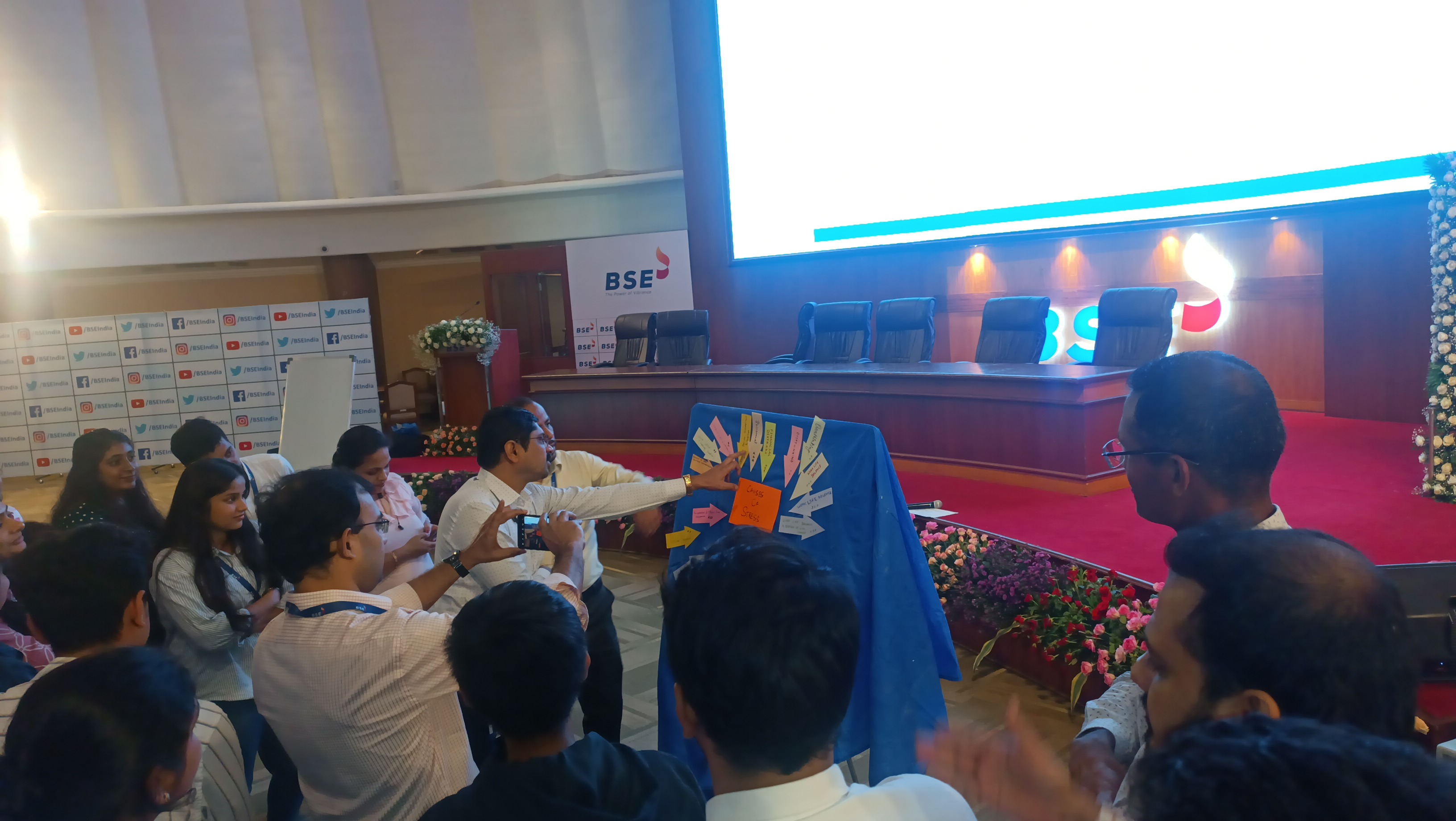
Pics from Stress Management Workshop

 Here are a few pics of a workshop on Stress Management that I conducted for my client in the BFSI space.

The participants from the middle and junior levels from different functions of the organization.  I am thankful for their whole-hearted participation in the exercises and for their insightful questions during the workshop, which made the entire experience wonderful both for them and for me.  

While they identified the causes of stress on their own, I shared with them a guided meditation exercise, and a journaling method  both of which they found very useful.

Participant Expectations


Reviewing the Causes of Stress


Journaling


While they built their action play, they also shared on the sticky wall, specific things they will put into practice.

Learnings that they will put into practice


coaching